Category Archives: Uncategorized

Existentialism by Suraj (Pt. II)

In the preceding post, it was determined that existentialism’s prime focus should be on what it, itself means. Let us try a familiar method in reducing “existentialism” to its component parts: existential and -ism.

Any English term ending in -ism refers to its prefix as an ideology, or belief structure. Thus, existentialism refers to our epistemology concerning existence.

What, then, is existence? Existence is the set of all that exists. In reality, all that exists is denoted by existentiality. Existentiality (or, what I call “existential reality”) will be the focus of Pt. III in this series.

Reflections on gender vs. sex

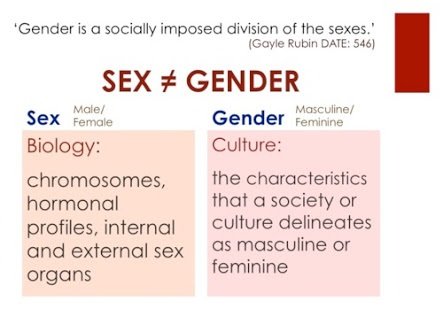
I view gender as mostly a cultural construct, though in more mainstream literature (as well as certain legal contexts) it’s regarded as a social one.

The concept of gender is “newer” than its biological analogue (sex) in both science and, seemingly, pop discourse. As such, the collective understanding of the former is less-developed in Western society.

As a socio-cultural concept, then, gender is closer to character (a social concept) than to temperament (biological). By definition, the idea of sex becomes more relevant to one’s temperament than to character.


Dr. Strange’s Foresight in Avengers: Infinity War

WARNING: this post contains spoilers to Marvel Studios’ 2018 Avengers: Infinity War

About an hour and 20 minutes into Avengers: Infinity War, Dr. Strange looks forward in time to “view alternate futures…to see all the possible outcomes” of the battle raging between the Avengers, Guardians of the Galaxy, etc. and the evil Thanos. When Tony Stark/Iron Man asks how many such outcomes the good guys win in, Dr. Strange gives him a long look before simply replying: “one”.

Dr. Strange’s mental voyage into the future shows that the Avengers stop Thanos from wiping out half of the universe’s population in one out of over 14 million future scenarios.

As a lifelong student of philosophy and psychology—and, in more recent years, a futurist in-training—this moment of the movie disturbed me. Having Iron Man and co. triumph over the would-be destroyer of half of life in 0.000007% of possible futures is a rather bleak state of affairs (to say the least).

This got me thinking about the fantasy-based problem from a more concrete, futuristic perspective. To my mind, more positive possible futures than not equals better. I hope that this much would not seem controversial to most people.

Could one positive future be best for everyone?

Is your mind physical?

That it is is a necessary assumption for those who accept that minds exist, but equate it with either the central nervous system or its encapsulating body.

Much of the issue around physicalism vs. the question of minds’ existences may have less to do with the nature of reality than with what we mean by certain words. If anything and everything is physical, then “physical” is a unifying rather than polarizing or distinguishing concept; there is no contrast class to it (that is: nothing non-physical exists). 

The project for physicalist cognitive scientists and philosophers of mind–those who, in short, believe that everything (including the mind) is physical–is, perhaps, simply to extend the language of physics to also accommodate “mind”. (And physicalism could well have to change, itself, in order to be able to do so!)

It may be convenient for a field like cognitive neuroscience especially to have a common framework for its studies of neural and cognitive (mental) systems, which have traditionally–a la Descartes and his successors–been regarded as more ontologically separate than they are, these days. Still, people’s mileages vary with respect to whether physicalism is the right unifying ideology for reality even aside from this possibility.

[The discussion from which this post arose took place on INTJforum, at: https://intjforum.com/topic/175287-if-physicalism-how-is-it-that-we-can-trust-our-cognitive-abilities/ ]

Science and Mysticism

A good friend and I once had a lengthy discussion about the metaphysics of miracles. We agreed that they fit within a scientific conception of reality by simply being extremely improbable events (at least, at first), often of a good or even healing nature.

As for consciousness and reality, it is well-known that empirical science has difficulties with the former (and, relatedly in my framework, with half of the latter). I would argue that mysticism correspondingly does not handle materiality very well…its accounts often lapse too far into subjectivism, i.e. that perception alone is sufficient cause for reality’s entire existence.

Can we disprove that the brain causes the mind?

Part of the problem involves explaining how we can know of other consciousnesses than our own. Say I were to remove another person’s brain. They would then be dead; does this mean that they’d suddenly lack a mind? What if they still retained their unconscious sub-mind and simply lost the ability to be conscious at all?

The only person who could absolutely verify that their own consciousness exists is him- or herself. But, in the above example, we could no longer ask our brain-less person if they were conscious and receive a response.

If we can’t perform this falsification meaningfully on another person, then how about on ourselves? Suppose now that, instead, I were to remove my own brain. No one else could be certain that my consciousness exists; could I still be, without a brain? Would “I” exist in any way that would allow me to check the status of my own consciousness? Only if I were conscious. There seems to be a circularity embedded in this approach that might render the whole matter unresolvable.

Descartes and Musk – On Dreams and Simulation

I’ve just begun reading through a paper of Tom Campbell’s which appeared in this video [link redacted]. In this post, though, I only aim to liken the popular simulation theory with Rene Descartes’ older “dream argument”. The former states that at least some of us are living in a virtual simulation. The latter runs as follows:

Premise 1 – If I know that I am awake, then I can eliminate as false the competing hypothesis that I am dreaming.

Premise 2 – I cannot eliminate the dreaming hypothesis.

Conclusion – I do not know if I am awake.

Elon Musk seems sympathetic toward the type of conclusion above. However, Musk’s interest has been not in dreams, but in whether a given person’s reality is provably virtual or actual. Descartes’ dream argument could be adapted in light of Musk’s challenge that we don’t know whether we’re living in virtual reality (VR):

P1′ – If I know that I exist in actual (non-virtual) reality, then I can eliminate as false the competing hypothesis that I exist in VR.

P2′ – I cannot eliminate the VR/simulation hypothesis.

C’ – I do not know if I exist in actual reality (as opposed to VR).

Testing the simulation hypothesis would minimally involve two steps. The first would be running participants through VR simulations. Following, the essential question for these subjects would become: “Did you know when your reality shifted between actual and virtual?” Naturally, experimenters could not give anything away until the end of such a study for it to be meaningful. If participants were consistently aware of when their reality changed kinds, then Musk’s simulation hypothesis would not apply: for their case, it would have to be ruled out as false. On the other hand, if subjects were generally unaware of their reality becoming actual or virtual, then Musk’s simulation hypothesis would hold true.

Campbell notwithstanding, this question presently remains unresolved.

A general tool for increasing critical reflexivity and awareness

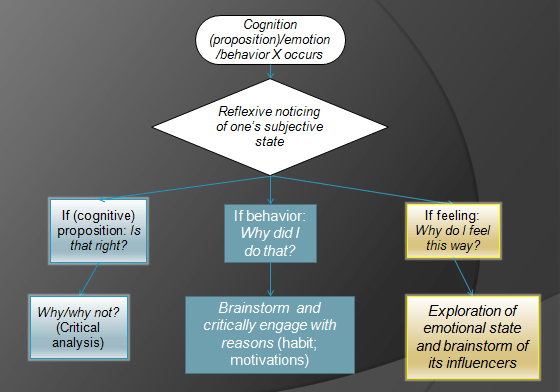
Critical-phenomenological method

“…How are people to become aware of their more destructive acts to begin with [e.g., of environmental disregard]—the fact that they, themselves, might be committing them regularly?

“The [phenomenological-critical] method can be performed mentally or verbally. Where individual privacy is of concern, the former would be preferred, and where other people can help one become aware of something less subjectively-accessible the latter would be. The step-by-step logical form I have chosen may dovetail neatly with efforts in schools to teach algorithmic thinking (e.g., through the instruction of computer programming), and it would likely prove most prudent to encourage such a habit of critical awareness from a younger age. However, the general method may just as well be practiced by any capable adult in any other realm or mode of existence.

“Naturally, people who think less linearly may find the method disagreeable, though it has been deliberately kept simple for early and general use. The method’s efficacy will also covary with individual differences in temperament, personality factors, attention-distributive tendencies, motivation, and health conditions, and would require appropriate adaptation for non-English speakers” (Sood, 2016).

Personality frameworks vis-à-vis therapy

[Source: http://intjforum.com/showpost.php?p=4557153&postcount=7 ]

I think that overall, I would rather use the Big 5 and parts of the Enneagram over the MBTI for psychotherapy.

Things that would discourage me from using the MBTI:

  • possible need to buy rights to utilize it professionally
  • potential for confusion toward, or over-intellectualization of the concepts being tested for and examined (esp. if the patient has a problem involving over-analysis of themselves or others)
  • the lack of any concept or measure of neuroticism

On the other hand, the MBTI is firmly established within our culture, and is widely recognized as a personality framework/test with decently interesting things to say about people. It also provides a nice language to share with the patient, though I still doubt its usefulness in therapeutic areas outside of, for instance, career coaching or relationship counseling.

The cognitive functions also provide a helpful language, but given the confusion/over-intellectualization point I raised above, I would probably steer clear from them in therapy forms that aren’t at least heavily grounded in cognitive-behavioral traditions. And even then, I would have to strive to simplify and adapt the functions into my own model, rather than emphasize their association with Jung or Myers (since that’s the point where the functions become pure devices of philosophical or academic scrutiny, rather than potentially useful tools for treatment and self-identification per se).

Things that would discourage me from using the Enneagram:

  • possible need to buy rights to utilize it professionally
  • stigma against its validity and overtly-ethical outlook (the former of which could, beneath the growing specter of evidence-based treatment as the expected norm, lead to a drastic cut in my range of prospective clients)
  • general ignorance of the system or what it’s about (also limits my range of patients)
  • the need for a longer therapeutic process, since the Enneagram must reach the depths of one’s soul in order to be optimally useful

I would definitely favor the Enneagram over MBTI in psychotherapy, since it gives such a relatively nuanced view of neuroticism. However, I’m a little uncertain of why I would use it over the Big 5, particularly when it comes to formalized assessment: it’s remarkably easy to measure neuroticism’s facets with a short Big 5-adapted survey, but the Enneagram would require building one from scratch (fun, but not entirely practical for most).

I would shift emphasis away from the Enneagram’s type aspect, and focus more on what type’s neurotic patterns a given patient exhibits. I might also use it as a rough way to gauge how healthy (healthy, average, unhealthy) or self-actualizing a person currently is. (The self-actualization component is actually a very viable edge the Enneagram has over MBTI and the Big 5, though I understand one of the key points of MBTI within therapy would be to ‘grow [more successfully] into’ one’s type. In contrast, the Enneagram is all about transcending one’s type, unrealistic though that might be to treat as the goal to reach by the end of each patient’s therapy.)

Finally, regarding the Big 5, I can’t think of much that would keep me from utilizing it. It’s the most conceptually specific (with its facet divisions of each basic personality domain), it provides ready-to-use, non-commercialized assessment tools, and it gives a helpful amount of detail about one’s psyche at the facets level. It also has a neuroticism component that captures the more common problems encountered in psychology, including anxiety and depression, and would be best (in those respects) for gaining an initial understanding of a patient’s maladies. I think the fact that it can’t give you a ‘type’ of person, only a picture of the individual in relation to the norm of people, isn’t really a downside at all: this actually circumvents the potential problem of a patient trying to shoehorn themselves into an idealized form of their type, even if it does detract a bit from their ability to find ‘like-minded individuals’ (they wouldn’t exactly be able to find an rLoAI online forum, for instance).

In the end, I would probably opt to borrow from all three personality frameworks discussed–MBTI to help elucidate cognitive style, Enneagram to identify the basic ‘type’ of a person in terms of potentials for growth/disintegration, and Big 5 to zero in on the specific personality factors worth working with–and adapt their concepts to be suitable both commercially and for my target client base. My therapeutic methodology, of course, would flex in accordance with the needs of each new patient (per the eminent existential psychotherapist Irvin Yalom’s recommendation), and would not rigidly rely on one framework over the others across all cases.