A little back-and-forth on psychology (mostly)…

[Source: http://intjforum.com/showthread.php?p=5418403#post5418403]

SS=me
T=correspondent

T: I feel like psychology is too weak on its own…

SS: Ironically, actually, it is psychology’s over-reliance on the other, more established sciences (viz., biology) that has done it a disservice in the past century. Its dominating attempts to imitate precisely traditional empiricism and its methods have left it theoretically underdeveloped and disunited, so that there are a number of sub-disciplines making up ‘psychology’, without any coherent framework making their connections–and, thus, the status of psychology as a grounded and self-consistent science–clear, to either its insiders or those looking from without.

T: I don’t see over-reliance being an issue. Fields separate because of expertise and imaginary divisors of what is connected to what (it’s all connected). The brain is small, so it’s easier to understand by partitioning.

SS: It’s fine that studies of the brain be partitioned, and additionally for disciplines to look toward others in figuring out how to best proceed themselves. But over-reliance, for psychology’s case, has made it such that it has no clear idea of what mind’s ontological status is, which is highly relevant to the extent that it should want to precisely characterize and explore the phenomenon (or, perhaps more accurately: its sub-phenomena) on its own terms.

Mind is not–in any obvious, or hitherto successfully argued-for way–‘physical’ in the same sense that every other physical object that has been studied scientifically has been shown to be. On the other hand, if its operations and contents actually are directly (i.e., not relying solely on measures of brain activity) detectable via physical methods, then it must be admitted that we currently lack the technology with which to achieve such. (Whereas for formerly-discovered phenomena of at least a somewhat similar nature, w/r/t their raising for us measurability problems–e.g., the invisible parts of the electromagnetic spectrum–further technological advancement was needed in order to actually establish their physical reality.)

Gravity, of course, would be another example of a postulated force with causal potency in relation to the known-about physical realm, but that is still undetectable in a way that has prevented us from knowing exactly what kind of physical substance it is or is made up of. (Assuming that it is, indeed, ‘physical’ in the traditional sense of possessing measurable energy or discrete constituents of matter.)

T: I’m hoping computational cognition becomes a field in the future, once we have cracked the puzzle, which will be accomplished in the next few years.

SS: Cognitive science is already computational.

T: That’s true, but it’s not authentic, nor is there even a basic mind that’s capable of meaningful use by means of artificial self-awareness.

SS: I’m not really sure what you mean by cognitive science’s treatment of mind not being “authentic”, though it certainly is incomplete at present. Perhaps that we haven’t (yet) established sentience/self-awareness in artificial/computational models of mind? If this is what you are getting at, the intellectual or empirical proof of any entity being sentient/self-aware is a highly complex problem, particularly the more we look at species (or, perhaps and for some, things like computers) that are not human.

T: Deep learning is about as sophisticated as it gets, and it’s not really even that impressive. The brain is highly parallel and we’ve only just begun to get the hardware that is matching it. Graphics cards follow this structure.

SS: Yes, and neural nets. Though those have been around for quite a while, and are extremely simplistic when compared to the actual human brain.

Again, though, the mind’s computational aspects have been overemphasized (since at least the cognitive revolution of the ’70s–though the story may well have started earlier, solidifying most definitively during psychology’s behaviorist phase) at the expense of a rigorous and fully-general understanding of what mind actually is. For the most part, cognitive psychologists don’t study and have not studied philosophy, which has also meant that they are largely unaware of 1) just how relevant the mind-body problem is to their work, and 2) how multi-faceted and complex mind truly is.

T: We are going to have to agree to disagree. I see nothing special about the mind that differs from any model of computation. Are you not in favor of the Turing Machine model that’s theorized to compute anything that a human brain can?

SS: Well, independent of my own views on mind, that a Turing machine can compute “anything” a human brain can is so far promissory note, at most. (How do we come up with an exhaustive list of all of the computations the human mind is capable of performing? At what point or how could we know whether such would be complete?) As is the general assumption that mental phenomena are, or will be found to be governed by the same natural laws that physical ones are.

T: As far as what is computable by the human brain, it is mostly assumed at this time.

[…]

T: Philosophy or philosophical approaches is/are useful in any discipline. Consciousness is a problem for metaphysicians. The “study of behavior” is not deep enough, but it’s a good starting point.

SS: Consciousness has become a problem for quite a few more groups than metaphysicians, hence its currently being a highly interdisciplinary field (consisting of researchers from A.I.; phenomenology; cognitive neuroscience; philosophy; physics; computer science…). As metaphysics has for so long proven incapable of solving the hard problem of consciousness (or even characterizing it in a way that would make it more amenable for other disciplines), it makes more sense now than ever that the problem should be treated in such a multi-plural manner.

T: All of those prior to the precomputational era are exempt. Metaphyisicans up from the 1900s are the only ones that count. To date, none of them are particularly impressive. As philosophy has been phased out somewhat, it’s slowly coming back, for good reason.

[…]

SS: No cracking the puzzle of mind without understanding just what it is and how it works, which may hinge on the extent to which progress is made on the question of how subjective experience (which has to be central to any complete science of mind) and the body are related: in addition to how the former is even possible, and what its nature (history; universal scope; dynamics…) is. We are not close to an answer to this ‘hard problem’, at present, and so the hope that it will be answered successfully “in the next few years” seems preposterous to the extreme.

T: I refuse to believe it’s as difficult as people make it out to be. Humans are emotionally driven, it’s not that hard. Emotionally Oriented Programming as a humorous analogy. After that, it’s simply an amalgam of networks that are extremely, extremely complex.

SS: You can refuse it all you like, but the fact is that it really has been so difficult for the vast majority of people who have studied and are studying mind.

Emotion is a part of the puzzle (and one that has been pretty neglected by psychology, and especially by cognitive science), but it is not by any means the only or necessarily biggest part of it.

T: Emotions are an evolutionary advantage, a synthetic approach would be a network that precedes and influences the logical network and determines how well it functions based on the load (whether too high or low) in its various sub-networks put on this artificial emotion network.

SS: I haven’t studied the question of interactive emotional-logical computational systems much myself, but here is something related in case you are unaware of it: https://en.wikipedia.org/wiki/Affective_computing

[…]

T: Subjective and objective are really not any different. It’s an elaborate illusion.

I can’t believe no ones figured that out yet.

SS: Believe it.

The subjective/objective question is still more in the domain of philosophy, and less within consciousness studies and cognitive science (though it is significantly more present in the former of these two than the latter).

Re. the subject-object split being an “illusion”, Eastern traditions (e.g., Buddhism) have held this view for centuries, and Western thought has recently begun to catch on to it, as evidence continues to mount in disfavor of Descartes’ original material body-immaterial soul(/mind) separation.

It is still an open question, however, whether or not subjective and objective may still be meaningfully distinguished in certain ways (or for certain reasons).

T: Dualism is just [stupid]. I won’t dismiss it though when dealing with whatever a “soul” can be, but for everything else, it’s unnecessary. Not including it won’t even compromise computation.

You can give the credit to any previous schools of thought, but the fact is, they’re not necessary for solving this puzzle. Plenty of people have said wise things, yet those wise things on their own are meaningless until given proper application.

[…]

T: Subjectivity is not much more than an internalized world shaped by language processing of that mind/body and feeling of mind/body. Due to diversity of parameters, each of us differs.

SS: If subjectivity really were “not any different” from objectivity, as you asserted above, then it would be much more than a mere “internalized world”. In consciousness studies, the problem of subjectivity is the ‘hard problem of consciousness’:

“The really hard problem of consciousness is the problem of experience. When we think and perceive, there is a whir of information-processing, but there is also a subjective aspect. As Nagel (1974) has put it, there is something it is like to be a conscious organism. This subjective aspect is experience. [emphasis added] (Chalmers, 1995: Facing Up to the Problem of Consciousness)

[…]

T: Of course, all of this is meaningless without a proper model for a basic mind, which is achieved after stripping the senses. Adding them back on simply adds potential for freedom and further learning.

SS: How could the senses possibly be 100%-stripped in a way that would leave what would presumably be left of the mind intact? It seems dubious that the (self-aware) mind as we are familiar with it could exist at all in this purely ‘senseless’ kind of manner.

T: A mind would be intact, but if the mind in this example would be mirrored from birth, it’s not a worthwhile exercise. A baby with no senses would lead to much at all. Not much would be learned.

It’s simply a process akin to reverse engineering, by trial-and-error. It’s kind of cheating, since adults have already accumulated lots of data (through experience/time).

The major issue is mostly “what is reality?”, not “what is subjectiveness?”. “What is mind?” is what naturally follows thereafter. Tying the t[w]o together, “what is complexity?”. “What is emerging complexity?” Although they are related, it’s clear to me at least, that subjectivity isn’t the right starting point, but rather a red herring.

[…]

SS: Personally, I think cognitive neuroscience (which has largely come to subsume psychology’s studies of mind) and cognitive-behaviorism (psychology’s current ‘paradigm’, if one may roughly speak of one) will have a lot to learn in particular from quantum physics; philosophy; and consciousness studies (e.g., phenomenology), if psychology and cognitive science are to have any hope of meaningfully contributing toward solving the mind-body problem. Computational theories have helped and conceivably will continue to do so, but their limits–which one need only look at artificial intelligence’s history from the past century to appreciate–will have to be acknowledged, before mind can be defined as accurately, and characterized as faithfully as it will ultimately need to be for our genuine understanding.

T: Quantum computers offer specialized processing for different areas of computation. Whether that relates to the mind or not remains to be determined. I suspect that the processes it would help are nonetheless not important for our starting goal, but essential for reaching higher peaks of intelligence.

SS: Intelligence is a problem I won’t go into, here; but, it will be interesting to see what potential new possibilities quantum computing will open up for cognitive science, as the former becomes more developed and as the two fields are synthesized.

T: Intelligence is one of the most key factors in solving this issue, but what the word encapsulates is clearly its own problem.

[To be continued…?]

Textual analysis (or hermeneutic work) as “all subjective”

This belief is rather easily explained away (though, sadly: not so easily disposed of, for the complacent offenders and “their” n=30 “subjects”!). It stems merely from a lack of correct understanding of differing methodologies, and their correspondences with prima facie differing practices.

Take my words, here. You are reading them. But are you reading me–my intent, my desires; and so on? If not, you are committing what I take to be the essential fallacy of the most literalizing scientists and analytic philosophers, who all fail to appreciate the proper way to arrive at another person’s meaning. For, if one does not understand what something means to the speaker–or, indeed, to any of their possibly-billions of listeners–one will forever be trapped and mired in his, her, or hir own “subjective” (in this case, impoverished as-such) meaning, distinct from and un-legitimized by one’s fellow beings in the world. Indeed: what a “meaning”!

For such a person, inter-subjectivity forever remains a mystery; coherent sociality at all willfully mystifies them, and what is left to mystify one will ultimately block one from becoming the best they can possibly be–whether “for themselves, or others”. (These quotes are necessary: for they hint at the absolute absurdity of the classical I-,-rather-than-thou formulation!)

In short, the one who instinctively dismisses hermeneutic work as “all subjective–and therefore useless” operates with a distinct lack of empathy: of caring for the immeasurable relativity of meaning among their “fellow” beings; of enriching subjectivity, generally; of truly understanding and connecting–and, henceforth, of caring for “him-, “her-, or “hir-self”.

Cling not to the dreaded “to the man!” “fallacy” quite so dearly, my friend–dialogical achievement is necessarily both art and science! Admit to a broader set of fallacies than have been so thoughtlessly inculcated: and tuck away that dirtied monologizing monocle, if only for the mere moment, good madams and sirs–

“Are we approaching robotic consciousness?” (video response)

[Original post: http://intjforum.com/showpost.php?p=5159026&postcount=2%5D

Video: 

My thoughts (I’m ‘S’)—

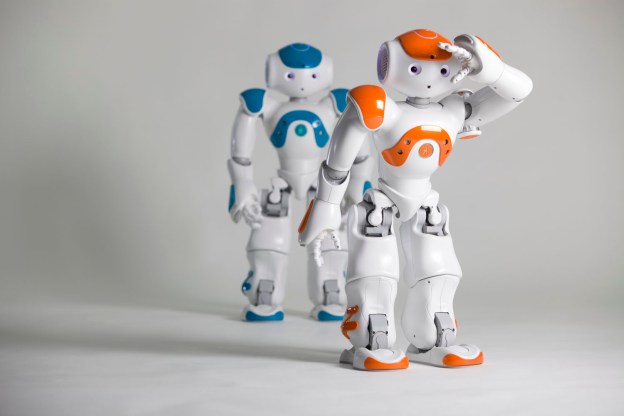
Video: King’s Wise Men/NAO demonstration

S: Impressive. I’d be interested to see what future directions the involved researchers take things.

Prof. Bringsjord: “By passing many tests of this kind—however narrow—robots will build up and collect a repertoire of abilities that start to become useful when put together.”

S: Didn’t touch on how said abilities could be “added up” into a potential singular (human-like) robot. Though Bringsjord doesn’t explicitly seem to be committing to such, the video’s narrator himself claims to see it as “much like a child learning individual lessons about its actual existence”, and then “putting what it learns all together”; which is the same sort of reductionist optimism that drove and characterized artificial intelligence’s first few decades of work (before the field realized its understandings of mind and humanness were sorely needing). So the narrator lverbally) endorses the view that adding up robotic abilities is possible within a single unit, which I have yet to see proof or sufficient reason to be confident of.

(Being light, for a moment: Bringsjord could well have a capitalistic, division-of-labor sort of robotic-societal scenario ready-at-mind in espousing statements like this…)

Narrator: “The robot talked about in this video is not the first robot to seem to display a sense of self.”

S: ‘Self’ is a much trickier and more abstract notion to handle, especially in this context. No one in the video defines it, or tries to say whether or how it’s related to sentience or consciousness (defined in the two ways the narrator points to), and few philosophers and psychologists have done a good job with it as of yet, either. See Stan Klein’s work for the best modern treatment of self that I’ve yet come across.

Video: Guy with the synthetic brain

S: Huh…alright–neat, provided that’s actually real. Sort of creepy (uncanny valley, anyone?), but at least he can talk Descartes…not that I know why anyone would usefully care to do so, mind, at this specific point of time in cognitive science’s trajectory.

Dr. Hart: “The idea requires that there is something beyond the physical mechanisms of thought that experiences the sunrise, which robots would lack.”

S: Well, yeah: the “physical mechanisms of thought” don’t equal the whole, sum-total experiencer. Also, I’m not sure what he means by something being “beyond” the physical mechanisms of thought…sort of hits my ears as naive dualism, though that might only be me tripping on semantics.

Prof. Hart (?): “The ability of any entity to have subjective perceptual experiences…is distinct from other aspects of the mind, such as consciousness, creativity, intelligence, or self-awareness.”

S: Not much a fan of treating creativity and intelligence as “aspects of the mind”…same goes for consciousness, for hopefully more-obvious reasons. Maurice Merleau-Ponty is the one to look into with respect to “subjective perceptual experiences”, specifically his Phenomenology of Perception.

Narrator: “No artificial object has sentience.”

Well, naturally it’s hard to say w/r/t their status of having/not having “subjective perceptual experience”, but feelings are currently being worked on in the subfield of affective computing. (There’s still much work re. emotion to be done in psychology and the harder sciences before said subfield can *really* be considered in the context of robotic sentience, though.)

Narrator: “Sentience is the only aspect of consciousness that cannot be explained…many [scientists] go as far as to say it will never be explained by science.”

S: They may think so, and perhaps for good philosophical reasons; but that won’t stop, and indeed isn’t stopping some researchers from trying.

Narrator: “Before this [NAO robot speaking in the King’s Wise Men], nobody knew if robbots could ever be aware of themselves; and this experiment proves that they can be.”

Aware of themselves again leads to the problem briefly alluded to above, regarding the philosophical and scientific impoverishment of the notion of ‘self’. I know what the narrator is attempting to get at, but I still believe this point deserves pushing.

Narrator: “The question should be, ‘Are we nearing robotic phenomenological consciousness?’”

S: Yep! And indeed, you have people like Hubert Dreyfus arguing for “Heideggerian AI” as a remedy for AI’s current inability to exhibit “everyday coping”, i.e. operating with general intelligence and situational adaptability in the world (or “being-in-the-world”, a la Heidegger).

In cognitive science terms, this basically boils down to the main idea underlying embodied cognition, a big move away from the old Cartesian or “representational” view of mind.

Narrator: “When you take away the social constructs, categories, and classes that we all define ourselves and each other by, and just purely looking at what we are as humans and how incredibly complex we are as beings, and how remarkably well we function in a way, actually really amazing, and kind of beautiful, too…so smile, because being human means that you’re an incredible piece of work.”

S: I wish the narrator would have foregone the cheesy-but-necessary-for-his-documenting-purposes part about humans’ beauty and complexity, in favor of going a bit further into the obviously difficult and tricky territory of “social constructs, categories, and classes” that we “all define ourselves and each other by”: and how near or far robots can be said to be from having truly human-like socio-cultural sensibilities and competencies.

Personality frameworks vis-à-vis therapy

[Source: http://intjforum.com/showpost.php?p=4557153&postcount=7 ]

I think that overall, I would rather use the Big 5 and parts of the Enneagram over the MBTI for psychotherapy.

Things that would discourage me from using the MBTI:

  • possible need to buy rights to utilize it professionally
  • potential for confusion toward, or over-intellectualization of the concepts being tested for and examined (esp. if the patient has a problem involving over-analysis of themselves or others)
  • the lack of any concept or measure of neuroticism

On the other hand, the MBTI is firmly established within our culture, and is widely recognized as a personality framework/test with decently interesting things to say about people. It also provides a nice language to share with the patient, though I still doubt its usefulness in therapeutic areas outside of, for instance, career coaching or relationship counseling.

The cognitive functions also provide a helpful language, but given the confusion/over-intellectualization point I raised above, I would probably steer clear from them in therapy forms that aren’t at least heavily grounded in cognitive-behavioral traditions. And even then, I would have to strive to simplify and adapt the functions into my own model, rather than emphasize their association with Jung or Myers (since that’s the point where the functions become pure devices of philosophical or academic scrutiny, rather than potentially useful tools for treatment and self-identification per se).

Things that would discourage me from using the Enneagram:

  • possible need to buy rights to utilize it professionally
  • stigma against its validity and overtly-ethical outlook (the former of which could, beneath the growing specter of evidence-based treatment as the expected norm, lead to a drastic cut in my range of prospective clients)
  • general ignorance of the system or what it’s about (also limits my range of patients)
  • the need for a longer therapeutic process, since the Enneagram must reach the depths of one’s soul in order to be optimally useful

I would definitely favor the Enneagram over MBTI in psychotherapy, since it gives such a relatively nuanced view of neuroticism. However, I’m a little uncertain of why I would use it over the Big 5, particularly when it comes to formalized assessment: it’s remarkably easy to measure neuroticism’s facets with a short Big 5-adapted survey, but the Enneagram would require building one from scratch (fun, but not entirely practical for most).

I would shift emphasis away from the Enneagram’s type aspect, and focus more on what type’s neurotic patterns a given patient exhibits. I might also use it as a rough way to gauge how healthy (healthy, average, unhealthy) or self-actualizing a person currently is. (The self-actualization component is actually a very viable edge the Enneagram has over MBTI and the Big 5, though I understand one of the key points of MBTI within therapy would be to ‘grow [more successfully] into’ one’s type. In contrast, the Enneagram is all about transcending one’s type, unrealistic though that might be to treat as the goal to reach by the end of each patient’s therapy.)

Finally, regarding the Big 5, I can’t think of much that would keep me from utilizing it. It’s the most conceptually specific (with its facet divisions of each basic personality domain), it provides ready-to-use, non-commercialized assessment tools, and it gives a helpful amount of detail about one’s psyche at the facets level. It also has a neuroticism component that captures the more common problems encountered in psychology, including anxiety and depression, and would be best (in those respects) for gaining an initial understanding of a patient’s maladies. I think the fact that it can’t give you a ‘type’ of person, only a picture of the individual in relation to the norm of people, isn’t really a downside at all: this actually circumvents the potential problem of a patient trying to shoehorn themselves into an idealized form of their type, even if it does detract a bit from their ability to find ‘like-minded individuals’ (they wouldn’t exactly be able to find an rLoAI online forum, for instance).

In the end, I would probably opt to borrow from all three personality frameworks discussed–MBTI to help elucidate cognitive style, Enneagram to identify the basic ‘type’ of a person in terms of potentials for growth/disintegration, and Big 5 to zero in on the specific personality factors worth working with–and adapt their concepts to be suitable both commercially and for my target client base. My therapeutic methodology, of course, would flex in accordance with the needs of each new patient (per the eminent existential psychotherapist Irvin Yalom’s recommendation), and would not rigidly rely on one framework over the others across all cases.

Cognitive psychology and the Jungian mental processes, Pt. I: Ni/Si (“introverted intuition”/”introverted sensing”) and long-term memory

[Addressed to the INTJforum ‘MBTI and Personality Theories’ sub-forum]:

Foreword

Easily the most prevalent complaint about the so-called Jungian or ‘cognitive’ functions is that they lack too much empirical support to warrant the frequently charitable assumptions made in discussions surrounding them. Many of the frustrations of people who remain skeptical of the functions thesis can be captured by the fact that, at least at present, the functions do not (easily) lend themselves or stand up to scientific scrutiny or testing (or funding).

The idea behind this post (and possibly future ones like it) represents a desire on my part to hopefully mitigate some of the above-named concerns, by highlighting just a few of the real connections between our accepted understandings in cognitive psychology, and how we (viz. casual and expert commentators, and typologists like Berens and Nardi) generally conceptualize the functions. As this can be approached in a number of ways, for the purpose of not rambling myself to death at one time, I will narrow the scope of this post to Ni, Si, (as much about them as we think we might know, in this preliminary stage) and how modern-day cognitive scientists understand memory.

Chapter 1:

The Jungian functions

It is commonly considered that Si has a memory component to it. Indeed, Dario Nardi’s own observations on the subject seem to validate this when he notes that:

“Si types may get ‘in the zone’ when reviewing past events…ISTJ and ISFJ easily enter an expert flow state while recalling, particularly if they close their eyes and take the time to immerse themselves in the memory, reliving it in rich detail” (Neuroscience of Personality, p. 94).

…and…

“[Si types] have a propensity for rote memorization, repetition, and in-depth reviews of daily events…Si types are highly capable at recalling information that has little or no context, such as lists of random words…” (NoP, p. 94)

But what most seem to leave out in their examination of Si is that, like Ni, it is predictive and allows users of it to “consider the future” (NoP, p. 95). Nardi notes that both Si and Ni types show moderate-high activity in a brain region that helps us do this, especially insofar as it is helping us plan our own actions ahead of time.

Conversely from Si, Ni is most commonly thought of as the ‘predictive’ function, or the one that most often and accurately allows us to predict what will occur in the future. Though Ni’s power to do this is clearly exaggerated in the mainstream typology culture, I will not attempt to dispel this misconception at the present time. Suffice it instead to point out what Nardi observes about Ni types, who “may easily show a zen state [overall brain pattern] when tasked to envision the future” (NoP, p. 102). And whether you want to call them Ni or NJ types, it is common for these types to self-report in confirmation of this observation made by Nardi in his MBTI-EEG studies.

But Nardi doesn’t mention how Ni looks back in time, or even how Si looks ahead. Probably our forum’s leading proponent of the functions model, whom we all know (to varying degrees of reverence) as […], stated it thusly:

“Ni can deduce the past from the present, and predict the future from the present, in terms of dynamics. Si instead sees things as mostly constant, and tends to be surprised by change. Both Si and Ni are predictive, but Ni types tend to impress others in terms of predicting things that were not ‘obvious’. (I.e., it’s obvious that if this is a rock, then it was a rock, and it will be a rock in the future; it’s not obvious that this is/was a meteorite that fell from the sky, and contains metals/isotopes that aren’t commonly found on Earth.)

And while his example regarding the rock, there, might receive mixed responses from the subforum community, the important point to focus on is that both Ni and Si are predictive and backward-looking functions, though they differ greatly in how they go about fulfilling those purposes.

Now, for those of you who have had enough Nardian ‘pseudoscience’ for one post, you can rest assured that from this point, we will be moving on to ‘actual’ cognitive psychology (though we will still be establishing its relations with Ni and Si in their primitive, abstract forms).

Chapter 2:

Mainstream cognitive psychology

In going forward, readers might find it helpful to keep this handy reference chart in view–but they should note that for the purposes of this post, we will be restricting our scope specifically to declarative (or “explicit”) memory:

(For more on long-term memory’s sub-systems, see here: http://en.wikipedia.org/wiki/Long-term_memory#Divisions_of_long_term_memory)

The important things to keep in mind (or commit to memory, as it were!) are that:

  • Explicit memory includes all memories that we consciously seek to store and retrieve. These memories are also called declarative memories because they include events that we have deliberately learned, such as ‘I enjoyed playing poohsticks in Sussex’ or facts, such as ‘they grow coffee in Brazil’, and can be described or ‘declared’ to others (Milner, 1965). Explicit/declarative memory is further divided into semantic and episodic memory” (Revlin, Cognition: Theory and Practice p. 152-3).
  • Episodic memory stores and connects the specific times, places, and events in an individual’s life…our episode memory gives rise to the conscious experience of recollection (Tulving, 1982, 1985; Wheeler, Stuss, & Tulving, 1995, 1997)…[and] allows us to travel back mentally in time to earlier moments in our lives not only to retrieve a fact, but in many cases, to relive the experience [retrospective memory]…episodic memory also allows us to travel forward mentally in time in order to remember to do things in the future [prospective memory]” (Revlin, C:T&P p. 153).
  • Semantic memory retains conceptual knowledge stored as an independent knowledge base. It is the library where discrete facts like ‘dogs bark’ and ‘robins are birds’ are stored. Your memories of where you were when you first learned such facts, however, are considered part of episodic memory” (Revlin, C:T&P p. 153).

“As a result of implicit memory‘s functioning, we are able to learn without being aware that we are doing so (e.g., Graf & Schacter 1985), and we can retrieve or use that information without being aware that we have stored it in memory” (Revlin, C:T&P p. 153).

I believe that understanding the two types of declarative/explicit memory presented is key to understanding the memory components of Ni and Si. (For those interested in why I don’t consider implicit memory relevant to the present discussion, see the paragraph below and feel free to comment on its contents.)

[[[I don’t believe implicit memory is particularly important to understand, here, since it functions “semiautonomously”, meaning that its mental functions operate automatically and “in the background”. Treatments of the Jungian functions as unconscious processes are more apt to describe how each type’s tertiary and inferior functions work (in generally inopportune ways), whereas the dominant and auxiliary functions are those that we are conscious of (though it is true that we tend to take the dominant’s operation for granted, as it’s essentially the ‘water we swim in’ and we’re too used to it to take much ‘conscious’ notice). Further, the EEG technology which Nardi utilized only measured neocortical brain activity, meaning it could only be used to analyze the topmost (and newest) layer. As this layer corresponds most closely with conscious and observable thought processes, implicit memory’s mechanics are a little trickier to uncover without more sophisticated brain-imaging technology.]]]

Based on the quotes whose respective authors I’ve cited, the connections between Ni/Si and explicit memory should become clearer. Si thrives on reviewing past events in rich detail, which correlates strongly with our understanding of episodic memory. Both Ni and Si engage in prospective memory, and at least Si engages in retrospective memory (“reliving [past experiences] in rich detail”, as Nardi observed). Finally, Si certainly utilizes semantic memory, which serves as a “library where discrete facts are stored”.

The above seems to leave Ni a bit in the dark, however. Specifically, two questions are left unanswered: 1) Assuming it can equally well engage in retrospective memory, how does it do so in a manner distinct from Si?; and 2) Given that Ni is far more apt to store relations and abstract principles than “discrete facts”, what is Ni’s relation to semantic memory? Might it be that there is some other memory bank which has been either unexplored in cognitive psychology, or left out of the present discussion? For now, I will leave these questions to readers to examine, though I will do so myself in a (hopefully, though not necessarily) timely manner.

In closing

My point here hasn’t been to ‘prove’ or ‘disprove’ the functions. Rather, I went forward with the assumption that the functions are worthy of further refinement and scrutiny, and in this early stage of their treatment the best we can do is ensure that they be defined in terms as technically precise as possible. If this can be done, then perhaps the functions can someday be studied in a more rigorous and scientifically-respectable manner–and there are, for purposes of better understanding ourselves and others, very compelling reasons for the rich variety in cognitive modes across humans to be elucidated and properly accounted for.

Artificial Intelligence: Can Science Truly Recreate You? [Daily Nexus//Science & Tech, 8.28.2014]

With the unprecedented rise of millennial computing, lightning fast telecommunication, vibrant social media and virtually limitless access to information, our lives are consumed by a torrent of powerful technological influences.

The gap between who we are at a deeper, more philosophical level and who we appear to be on our various web profiles is simultaneously widened and blurred by recent scientific and technological advancements. “Who we are” has become a vexing and tiresomely complex concept, and in our push toward increasingly more efficient modes of survival, we seem to have run out of collective patience with it.

Yet in spite of this, debates over what makes us who we are continue today. The age-old question of how our minds interact with our bodies has been passed off from philosophers to computer scientists and engineers. Some of the latter figures claim that the advent of robotics and more sophisticated computing methods has made inevitable what Google engineering director Ray Kurzweil refers to as our “next stage of evolution”— by which he means artificial intelligence. A.I. is, in simplified terms, a rapidly accelerating field that tries replicating human functions and capabilities in machines to the fullest extent that current technology allows.

But is it possible for machines to exhibit complete human intelligence and consciousness?

UC Santa Barbara Psychology professor Stan Klein, whose research focuses on issues related to social knowledge representation, said that mainstream psychology believes that humans are machines, and thus can be understood from principles that comprise the backbone of modern applications in machine technology.

“The materialist dogma of modern science threatens to remove the [mind-body] issue from discussion, since it does not fit their metaphysical presumptions,” Klein said. “Perhaps they are right — or perhaps one can intelligently widen the scope of physicalism to encompass experience.”

At the forefront of such “physicalist” groups today are neuroscientists, many of whom believe that the mind can be fully reduced to electrochemical and mechanical bodily functions. From this perspective, replicating human consciousness in machines may prove less difficult than expected.

This possibility once pondered only in science fiction thrillers (in which the robots typically end up rebelling against their creators and destroying humanity) is becoming more compelling with the integration of technology and automation into nearly every facet of our lives, and may even become perfectly natural.

But is it scientifically feasible?

Albert Shin, a UC Santa Barbara Philosophy doctorate alumni and visiting assistant professor at Villanova University, said that even if we can explain the various workings of the brain, we are still missing something in our explanation of day-to-day conscious experience.

“With recent developments in cognitive and neuroscience, it is easy to think that all there is to the mind is a collection of brain cells,” Shin said. “Admittedly, the evidence suggests that there is a much closer relationship between mind and body than was argued by dualists like Descartes. But it would be a mistake to jump to the conclusion that all there is to the mind is simply matter.”

How these debates will pan out is still yet to be determined. But in proceeding, we should not forget to keep asking ourselves two basic questions. Who are we? And to what extent can — or more aptly, should — we allow science to answer that question for us?

[Feature image courtesy of Christine Daniloff/MIT]

Inspiration

Apologies for the delay. I haven’t been feeling inspired enough to produce worthwhile content, over the past week.

Speaking of which, today’s blurb-esque post will be about inspiration. (How uninspired, you say? Balderdash! Poppycock! Gibber-flabber, gobbledygook, pishing-posh, …!)

It’s a tricky, capricious thing, inspiration. Bedevils and frustrates just about everyone who consistently engages in projects requiring it. Indeed, in order to create something, one must first be sufficiently inspired to act on forming that very thing. So, naturally, inspiration is very important in a variety of task-related contexts.

To help get us started, a quick run over to Google Search yields:

in·spi·ra·tion
noun
1. the process of being mentally stimulated to do or feel something, especially to do something creative.
synonyms: creativity, inventiveness, innovation, ingenuity, genius, imagination, originality; …

Very broad starting base, this. By the above definition, inspiration is a process that is directly involved in both motivation and the intrinsic stimulation required to do or feel something.

When I sat down and looked at this (then-empty) text-space last night, I thought: “I’m just not inspired enough to write anything.” But can inspiration not happen along the way during a project, rather than right at the start? Who’s to say when exactly inspiration will hit during an activity? In general, inspiration is not very finely traceable (for those without the appropriate neuroscientific tools with which to scan their mental processes in a visible format, that is). All too often, those of us who rely on inspiration (and everyone does) are very much at its unpredictable mercy.

I shall offer up a theory: that for those of us more regularly involved in the so-called creative arts–e.g., writing and the calligraphic arts–inspiration does, and should happen when we least expect it. This is because inspiration knows no master: its fickle nature occurs precisely because of our desperate attempts to capture and put a lid on it. Inspiration has a mind of its own: you could almost hear it taunting from across the room where you can’t reach it, “nuh-uh–I’ll call you!” as your pay-deadline for a project approaches nearer and nearer.

Why should things be so frustrating and complicated? Because by its very nature, inspiration’s product–namely, art–is all about relinquishing control and surrendering one’s sensibilities to the work being considered. Whether it’s nature, a painted masterpiece, or a perfectly eloquent line in a book that enthralls one’s imagination, the most genuine inspirations occur when one is falling in love with the object of his or her appraisal.

And love, that greatest work of art one could possibly create or become engrossed in, involves the ultimate in letting go of one’s usual controls and defenses. Inspiration hits when we are so inexplicably struck by the beauty of a thing, person, or idea, that one simply must “do or feel something–especially something creative”, for the purpose of an unequivocal, irrefutable, and undeniably-felt love.

And I say that’s the way inspiration should be.

Approaching the noble art (and sublime science) of communication

Apparently, this has become an “art of” blog. Perhaps soon, it will become a pure art blog!

Today, I want to talk about communication. What accounts for the often vast and perplexing discrepancies invisibly at play as (apparently goodhearted) individuals attempt to successfully communicate?

Broad question, Suraj! Yeah, yeah, I recognize that. Actually, a (very dear) reader of mine said so first. Perhaps she will grace us with her insightful perspectives and charmingly elegant presence in a follow-up comment here, sometime.  [ 🙂 ]

Right, then: let’s narrow this down. What variables are at play when it comes to the observable and commonplace nuances in human communication?

Here’s a piecemeal set to help get us started:

  • Personality— A favorite pastime of mine to study, and an endlessly fascinating subject in general. See here for more.
  •  Cognition— How do people think? For more on individual differences in this vein, consider the scientific (albeit simplistic) Cognitive-Experiential Self-Theory (CEST).

Naturally, there are plenty more factors to discuss than the mere two I’ve just listed. This is simply to get the slow ball rolling on my blog’s gently-sloping hill. Communication is important for obvious reasons, yet it’s frequently and inconveniently misconstrued at best, inexplicably and woefully understudied at worst.

Here’s a link to expand our current scope–one that I hope will provide worthwhile and interesting enough to flesh out accordingly in a future post.

Innovation, authentic entrepreneurship, and martyrdom

Today’s entry will deal primarily with the art of innovation.

Innovation is something of a buzzword among our generation–perhaps so much so that it’s no longer entirely clear what it means. Accordingly, it has become worthy of my more penetrating (and relatively practical!) philosophical attentions.

Here are a few of the things that genuine, true-to-heart and cutting-edge innovation entails:

  • An insatiable thirst to succeed;
  • The correct resources/resource-gathering strategies (tricky, for the self-sacrificing entrepreneur);
  • A clear passion for what one does (much easier to identify, than to truly follow);
  • The ability to keenly foresee consumer needs that are mostly invisible to others (most people can’t do this well);
  • The will to follow up on a vision and successfully bring one’s ideas to fruition; and
  • The ability to persuade prospective partners and the masses that one’s product is truly worth investing in, and is far more effective than everything else out there (exactly because it’s so different from everything else).

Not everyone has the resources, willpower, psychological resilience, or even the innate creativity necessary to be an authentic innovator. There are many phases involved the in process of innovating, and many personal traits required by the visionary–self-sacrifice and the willingness to risk it ‘all’ (i.e. one’s own sanity) high up among them.

To be clear, this post is nothing very innovative. But I think it’s important to pause on what makes something truly novel and worth its target market’s while. There’s a lot of talk about entrepreneurship and innovation in our generation, but not the appropriate amalgamation of factors to turn enough of our ideas into longstanding realities during our own lifetimes.

“During our own lifetimes”–to the aspiring innovator, that “our” is relatively immaterial. Why? Because this type of person sees past the confines of their present time, the conventions that define their surrounding society, the go-to methods it deems “correct, respectable and reliable” in order to succeed. What’s familiar and “secure” is by no means the driver behind the unique innovator’s work-related impetus.

The successful pioneer commits unhesitatingly to the future worth of their investments, and plants the seeds necessary for their efforts to be of worth to the hearts and souls of a posterity that will benefit from (and henceforth reap the rewards of) their work.

The biggest problem, however–as I will discuss in the forthcoming days–is that the overwhelming majority of self-labeling entrepreneurs are far more attached to their own egos and material success, than to the thought of enhancing the future of their species’ hitherto undefined standards of life.

Focus, mindfulness and meditation

Focus - img

This post will begin exploring the practical benefits of mindfulness. Today’s focus will be focus.

There are a few ways to achieve mindfulness. One method that’s gained recent attention in the Western world is mindfulness meditation, which I will discuss below. I will then connect meditation to how we can improve our focus.

In our rapidly industrializing world, with continually proliferating distractions competing for our precious attentions, the exact opposite of mindfulness–or mind-wandering–is especially easy to let happen. Mind-wandering involves losing sight of why we’re involved in what we’re doing, and subsequently losing the ability to keep our attention fixed on that thing.

Let’s go against the grain a little here and slow down on meditation. Learning how to slow down is crucial: it allows us to detach from the ever-expanding chaos of our outer world, and zone back in on what’s truly important and relevant to what we would ultimately like to achieve.

Which brings us to this post’s scope: What meditation is, and how it can be done.

The first question is answered simply enough. Though there are a few distinct ways of defining it, one way particularly relevant to improving focus involves closing one’s eyes and shifting attention away from the outer world (or one’s distracting thoughts–whatever the element of unwanted distraction is), and in toward one’s own bodily functioning. This could take the form of focusing on the steady rhythm of one’s breath (possibly counting as each goes by to shift attention away from worrisome thoughts), or simply thinking about parts of the body and calmly noting how one feels. The latter method is especially helpful for improving our emotional awareness, a very valuable trait to develop for our overall fulfillment. (Stay tuned!)

Exercises like meditation exemplify our ability to shift attention with intention. Why is this important for focus? Because the opposite of focus is distractibility, and distractibility results when one’s attention is strained for too long on a task, event, or particular state of affairs. Meditation allows us to detach from such sources of mental burden and center back in to rediscover ourselves.

In short, then, mindful meditation helps us put things back into clearer perspective. This enables us to achieve our goals with renewed senses of purpose and self-acceptance; thus granting us access not only to why we do what we’re doing, but also what we would like to achieve by doing it over the long haul.